The Eebz Product Taxonomy
How Eebz groups and classifies products - and why getting taxonomy right is essential for market share, top sellers and business decision making.
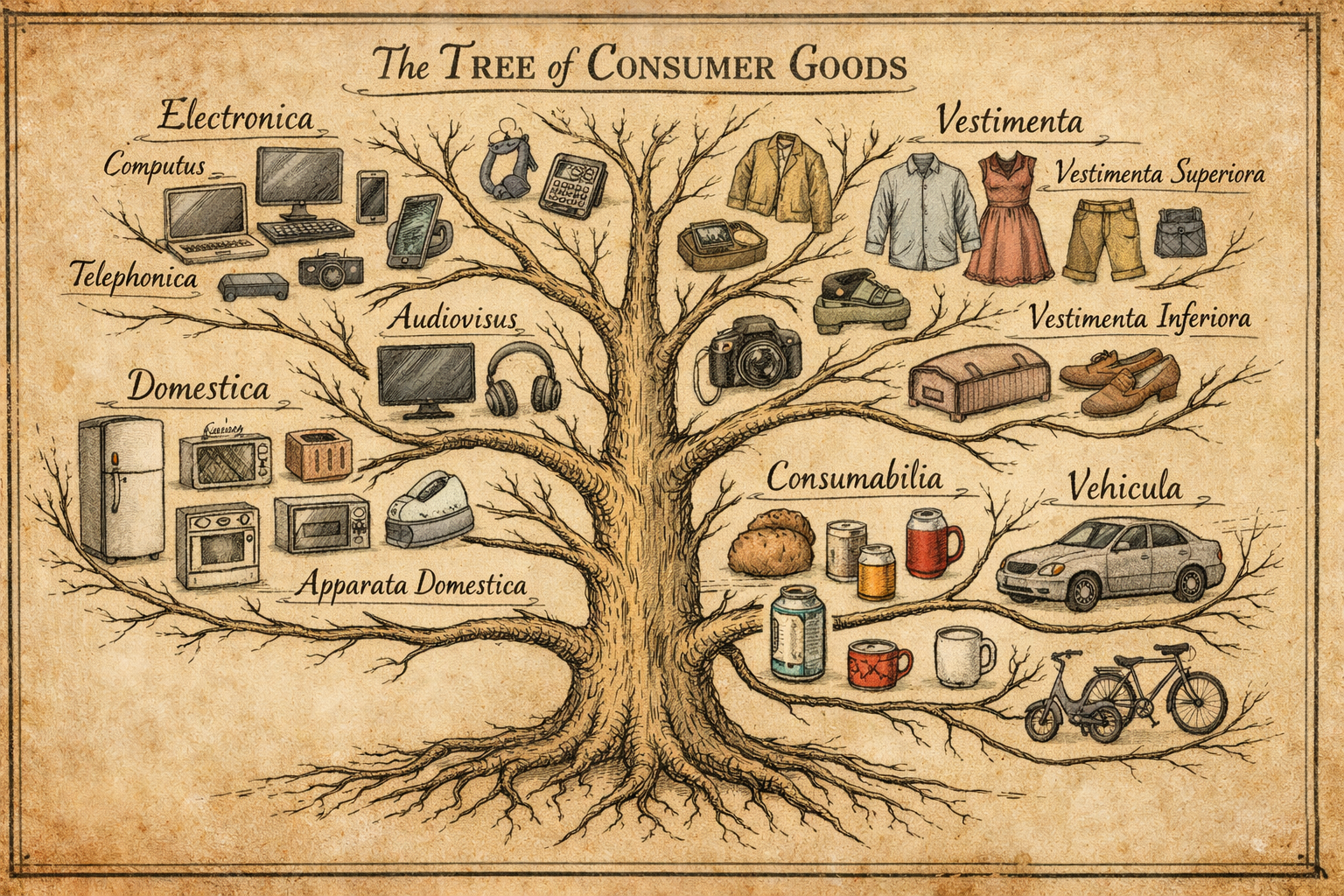
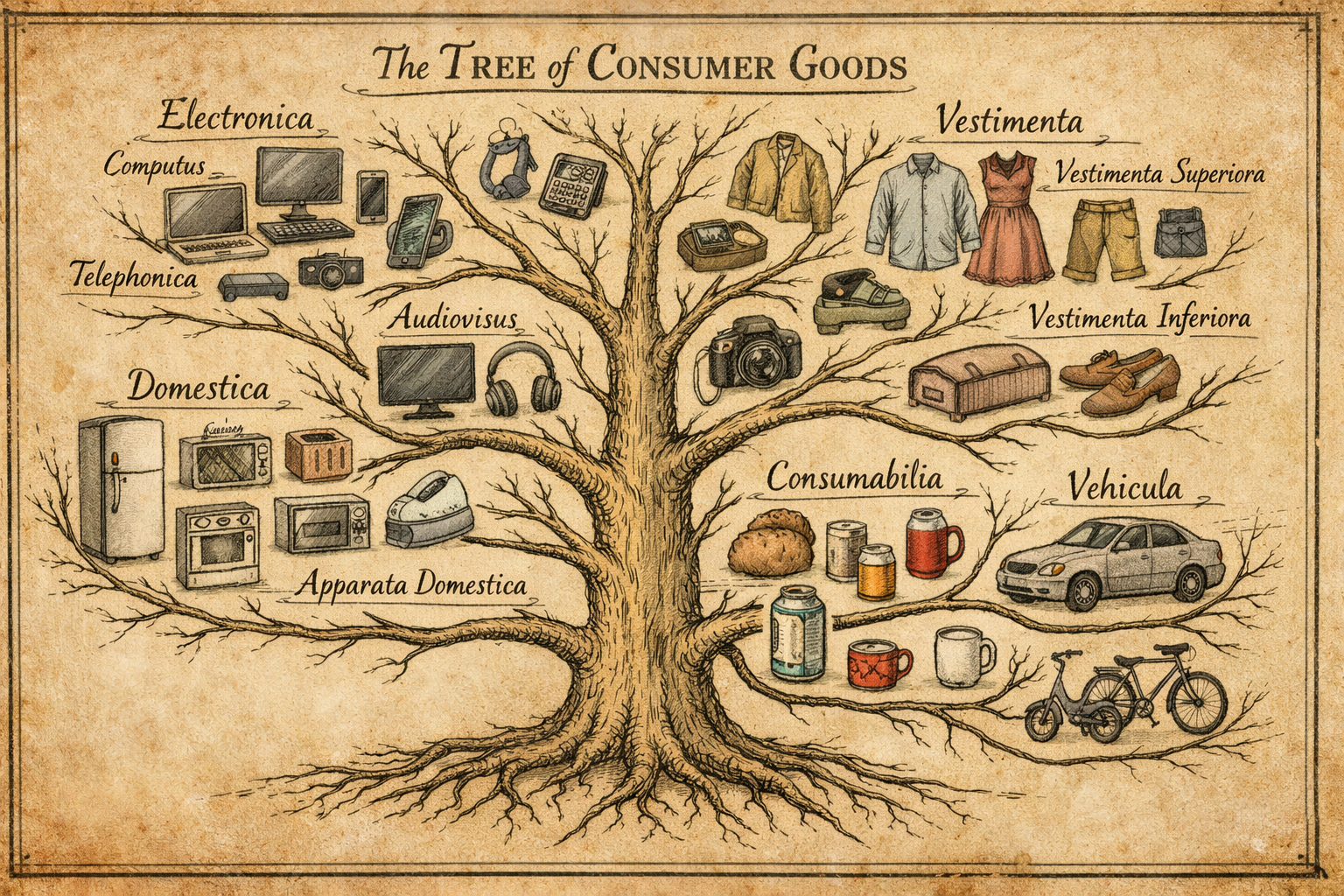
Why Product Taxonomy Matters
Every important business decision in retail starts with the same question: what are we comparing?
When a brand asks "what is our market share?", the answer depends entirely on how you define the market. When a retailer asks "what are our top sellers?", the answer depends on which group of products you are looking at. Are gaming headphones distinct from audio headphones? Is sparkling water part of the same category as still water - or soft drinks?
These are not abstract questions. They drive ranging decisions, pricing strategy, promotional planning, competitive analysis and investment. Get the groupings wrong and you are making decisions based on misleading data.
Eebz has built a product taxonomy specifically designed to solve this problem - a structured hierarchy that groups products consistently so that market share, top sellers, share of shelf and competitive benchmarking all mean the same thing to everyone using the platform.
The Three Fundamental Product Groups
At the top of the Eebz taxonomy sit three fundamental groups. These reflect how consumers purchase products and the economic characteristics that define each category.
1. FMCG (Fast-Moving Consumer Goods)
Known as CPG (Consumer Packaged Goods) in the United States.
These are the products consumers buy frequently - often weekly or multiple times a year. They are typically low-cost, high-volume items that move quickly through retail channels.
Characteristics:
- Purchased many times a year
- Typically cost less than $50
- High purchase frequency, low consideration time
- Examples: food and beverages, toiletries, cleaning products, over-the-counter health products, pet food
FMCG drives the highest transaction volumes in retail. Market share in FMCG categories can shift rapidly with promotions, availability and shelf placement - making live digital shelf monitoring especially valuable.
2. Consumer Durables
Products that consumers buy infrequently and expect to last. These are higher-consideration purchases where product information, reviews and comparison play a much bigger role in the buying decision.
Characteristics:
- Purchased once every one to two years (or longer)
- Can cost upwards of $100,000
- Higher price points, longer decision cycles
- Examples: electronics, home appliances, furniture, gaming peripherals, power tools, musical instruments, sporting equipment
Consumer durables are where product taxonomy becomes particularly important. The question of whether gaming headphones sit in the same category as studio headphones - or whether they are separate markets - directly affects how market share is calculated, which products appear as "top sellers" and how brands benchmark against competitors.
3. Capital Purchases
The highest-value, lowest-frequency purchases. These are major investments, often financed through leasing or credit, and the buying cycle can span years.
Characteristics:
- Typically cost above $20,000
- Often purchased on lease or finance
- Purchased once every 3 to 10 years
- Examples: cars, commercial vehicles, industrial machinery, large-scale IT infrastructure
Capital purchases involve the longest decision cycles and the most complex sales processes. Taxonomy at this level helps brands and dealers understand market positioning across segments - for example, distinguishing between electric SUVs and combustion SUVs, or compact cars and luxury saloons.
Why This Hierarchy Matters
These three groups are not just labels - they define fundamentally different buying behaviours, and that affects every layer of analysis beneath them.
| FMCG / CPG | Consumer Durables | Capital Purchases | |
|---|---|---|---|
| Purchase frequency | Multiple times per year | Every 1 - 2+ years | Every 3 - 10 years |
| Typical price | Under $50 | $50 - $100,000 | $20,000+ |
| Decision time | Seconds to minutes | Days to weeks | Weeks to months |
| Key drivers | Availability, price, habit | Features, reviews, price | Finance terms, total cost of ownership |
A taxonomy that mixes these groups - or fails to distinguish sub-categories within them - produces misleading market share figures, inaccurate top-seller rankings and flawed competitive analysis.
The Full Hierarchy: From Product Groups to Markets
Below the three fundamental product groups, the Eebz taxonomy introduces further layers of classification. Each level narrows the focus until we reach the market - the level at which competitive analysis, top sellers and market share are most meaningful.
Here is how the hierarchy works, using Consumer Durables as an example:
| Level | Example |
|---|---|
| Fundamental Product Group | Consumer Durables |
| Product Group | Technical Consumer Goods |
| Sub-Group | Consumer Electronics |
| Industry | Mobile Phones |
| Market | iOS Mobile Phones |
Product Groups
Each fundamental product group is divided into broad product groups. For Consumer Durables, these include categories like Technical Consumer Goods, Apparel, and others. These groups reflect the major divisions that retailers and industry bodies already recognise.
Sub-Groups
Product groups are then broken down further. Technical Consumer Goods, for example, splits into Consumer Electronics, Major Domestic Appliances, and so on. These sub-groups bring related product types together while keeping distinct categories separate.
Industries
Sub-groups are divided into industries - the level at which broad competitive landscapes become visible. Examples within Consumer Electronics include:
- Mobile Phones
- Headphones & Headsets
- Video Games
- Televisions
An industry represents a recognisable product category that retailers, analysts and consumers would all understand as a coherent group.
Markets
Industries are then divided into markets - the most granular level of the Eebz taxonomy. This is where competitive analysis becomes sharp and actionable.
- Mobile Phones → iOS Mobile Phones, Android Mobile Phones
- Headphones & Headsets → Gaming Headsets, Wireless Earbuds, Studio Headphones
The key test for what constitutes a market in the Eebz taxonomy is practical:
- Is the top 10 of interest? If a top-10 ranking of these products would be meaningful to a brand or retailer, it is likely a distinct market.
- Are these typically competing products? Products within a market should be genuine alternatives from the consumer's perspective.
- Do retailers create categories for these items? If retailers typically group these products together on their shelves or websites, that is a strong signal that they form a coherent market.
This layered approach means that when Eebz reports market share or top sellers, the data is always grounded in a clear, consistent definition of what is being measured. A brand can see its position at the industry level and drill down into specific markets - and the numbers tell a coherent story at every level.
This is especially important for dominant market position reporting, where the legal definition of a "relevant market" can have serious compliance implications. By structuring taxonomy from the top down - starting with the fundamental product group and working through product group, sub-group, industry and market - Eebz ensures that share data is meaningful, defensible and actionable.
Countries and Regions: A Separate Dimension
Geography is treated as a separate dimension in the Eebz taxonomy - not as part of the product hierarchy itself.
Every market is assessed on a per-country basis. Air Fryers UK is distinct from Air Fryers Germany. The products may overlap, but the competitive landscape, retailer mix, pricing and consumer behaviour are different in each country. The country is almost always the base unit of analysis.
Countries then roll up into regional groups - but these vary from brand to brand based on how each organisation is structured:
- Benelux - Belgium, Luxembourg and the Netherlands are typically managed and measured together as a single office.
- EMEA - all European countries are often combined with the Middle East and Africa into a single region.
- APAC - increasingly, we are seeing South East Asia, Australia, the Middle East and Africa combined together under APAC.
- North America - often includes South America in practice, despite the name.
These regional groupings are not universal. They reflect how individual brands organise their sales teams, set targets and report performance. Eebz supports flexible regional roll-ups so that each brand can see data aggregated in the way that matches their own organisational structure - while always preserving the country-level data underneath.
Getting Taxonomy Right
Product taxonomy is not glamorous work, but it is foundational. Every insight Eebz delivers - from share of shelf to competitive benchmarking to Ada's sales recommendations - depends on products being grouped correctly.
We are continually refining our taxonomy as new product categories emerge and existing ones evolve. If you have thoughts on how products in your industry should be classified, we want to hear from you.
Get in touch to learn more about how Eebz structures product data, or explore PerfectPage™ Digital Shelf Analytics to see taxonomy-driven insights in action.