Digital Shelf Analytics: What It Is, What It Measures and How to Choose a Provider
What digital shelf analytics measures, how the data is collected, where it goes wrong, and the questions that separate one provider from another.
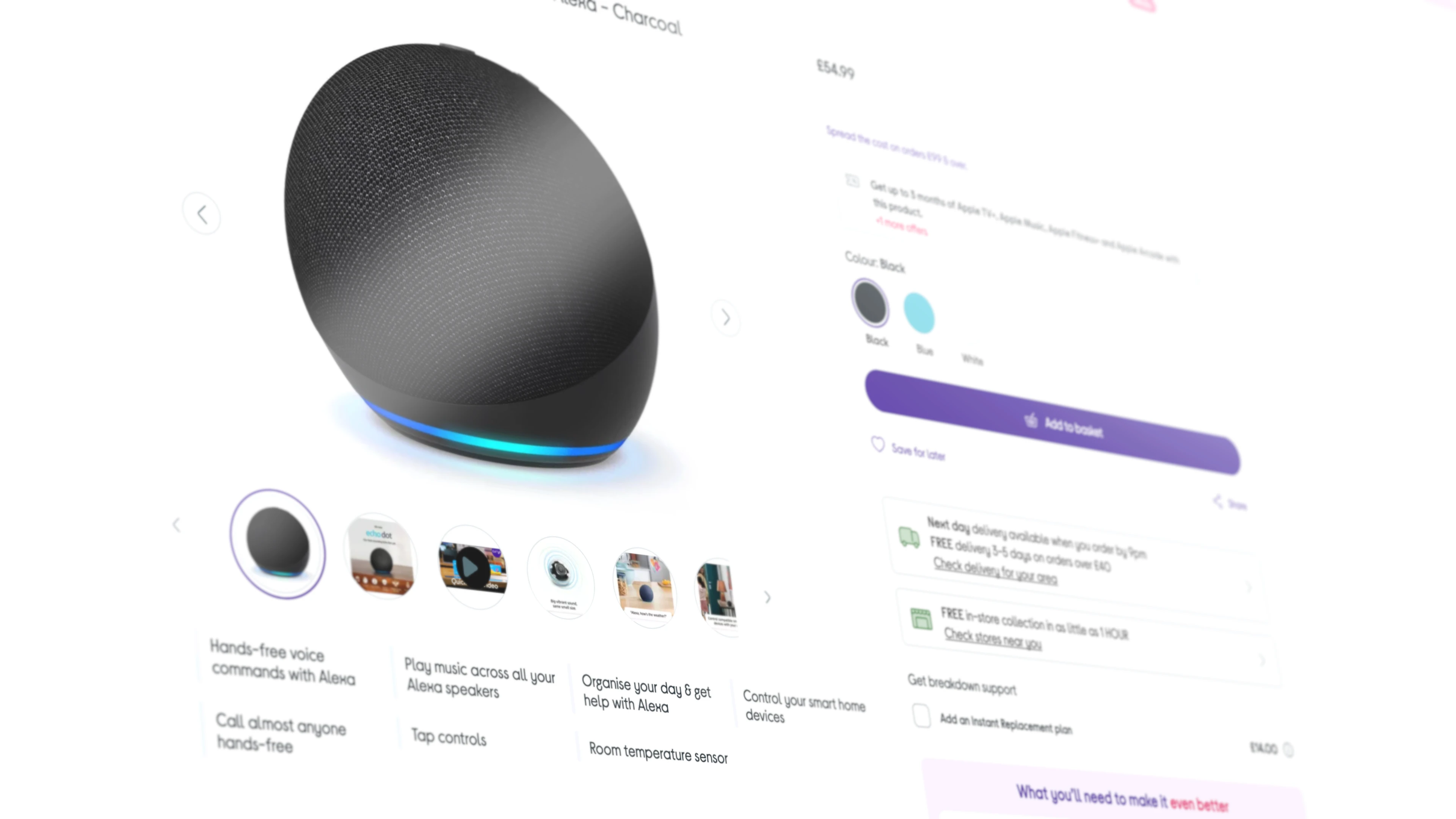
Digital shelf analytics is the daily measurement of how a brand's products appear and compete on retailer and marketplace websites: whether they are in stock, what they cost, how the product page reads, where they rank in search and how much of the category they hold. It exists so brands that sell through retailers can see what changed on the shelf today and act on it before the sale is lost.
This guide covers what digital shelf analytics measures, how the data is collected, where it goes wrong, who uses it, and how to choose a provider.
Why the digital shelf needs its own measurement
In a physical store, a brand and a retailer agree a planogram, and a merchandiser checks the shelf matches it. The shelf changes when someone moves the stock.
Online, the shelf is every product page at every retailer in every market you sell in, and it changes without anyone telling you. A retailer drops a price at 3am. A listing falls off the category page. A marketplace seller with grey stock takes the Amazon buy box. A content update overwrites the launch copy with last year's specs. None of it shows up in your sell-in data until weeks later, as a sales number that is lower than it should be.
Three things make the online shelf harder to manage than the store shelf:
- Visibility is ranked. A shopper sees a handful of products per search. Page one sells and page four barely exists.
- Price is transparent. Shoppers compare in seconds, and retailers match each other automatically.
- Problems compound. An out-of-stock costs today's sales and also pushes the product down the retailer's ranking, which costs next week's.
Nobody can check that shelf by hand. Digital shelf analytics does it every day.
What digital shelf analytics measures
| Area | What it tracks | Why it costs sales when it goes wrong |
|---|---|---|
| Availability | In stock or out, by retailer and by store where the retailer shows it; new listings and delistings | A product that is out of stock or delisted sells nothing and loses rank |
| Price and promotions | Today's price at every retailer, price history, competitor price drops, whether an agreed promotion ran on the agreed dates at the agreed price | Shoppers buy elsewhere, and promotion money is spent on days the price was not down |
| Sellers and buy box | Every marketplace seller's offer, who holds the buy box, lost buy box and suppressed listings | A third-party seller can start a price chain that other retailers follow |
| Product content | Titles, specs, images, video, badges and required phrases checked against the brand's own standard | Wrong or missing content lowers conversion and search rank |
| Search rank | Organic and sponsored position for the search terms that matter, at each retailer | A product that is not on page one for its main search term is mostly invisible |
| Share of shelf and assortment | Your share of the whole category, weighted by rank, and the gaps in each retailer's range | You cannot argue for more range with a buyer without evidence |
| Ratings and reviews | Review score and count over time | Shoppers filter on rating, and retailers rank on it |
A useful digital shelf analytics platform ties these together. A drop in search rank often traces back to a stock-out three days earlier, or to a competitor's price drop, and you only see the cause if the data sits in one place.
How the data is collected
Retailers do not hand brands this data, so digital shelf analytics providers collect it from the retailer websites themselves. Three steps decide how good the result is.
1. Reading the page. A crawler visits each retailer's category pages and product pages and extracts price, stock, content, rank and sellers. Retailers change their websites constantly, about five of them every day across the markets we track, and many use bot protection and heavy JavaScript. When an extract breaks, the data stops. At Eebz our engineers fix a broken extract in 36 hours on average.
2. Matching the product. The crawler sees a listing, not your SKU. Each listing has to be matched to the right product, variant and market. Phones come in 16 to 18 variants per country. Headsets come in colourways, wired and wireless versions, and console editions (our gaming accessories guide goes into this). Bundles and grey imports look like new products. Eebz matches 95% of new listings automatically within days, with no URL lists to maintain.
3. Timing the read. Retailers reprice at predictable times. A price read at the wrong hour reports yesterday's price as today's. Eebz times each extract to when that retailer actually reprices, in its own early morning, and delivers the data by 10am local time.
As our co-founder Peter Laughton puts it:
We built Eebz to cope with video games and mobile phones, where a launch is won or lost in days. Everything since has been easier.
Where digital shelf data goes wrong
Most complaints about digital shelf analytics come down to a handful of structural gaps. They are worth knowing before you buy.
- Wrong timing. The extract says full price, the website says 20% off. The data was read before the retailer repriced.
- Page one only. A tool that reads the first page of a category cannot calculate share of shelf, because it never sees most of the category.
- URL lists. A tool that tracks the URLs you gave it misses launches, new variants, competitor products and delistings.
- Variants treated as separate products. Range and product performance become impossible to read.
- Failed scrapes. When an extract fails, you need to know whether you are looking at a gap or a number. Eebz only reports what shoppers can see today and never fills a gap with yesterday's figure.
- Slow repairs. If a broken extract takes weeks to fix, you lose weeks of data at that retailer.
We wrote about these gaps in more detail, and the 12 foundation models we built to close them, in your digital shelf data has gaps.
Accuracy is measurable. In a benchmark of 50 products across 8 retailers in the UK and Benelux, Eebz data was 96% correct against about 65% for the market leader.
Who uses digital shelf analytics
Different teams use the same data for different jobs.
- Ecommerce and digital shelf managers run the daily check: stock, price, content and rank at every retailer, with exceptions flagged by 10am.
- Sales and key account managers walk into buyer meetings with evidence: range gaps, share of shelf against competitors, and whether the promotion they paid for ran.
- Category and marketing teams check content against brand guidelines and track search rank for the terms that drive sales.
- Supply chain teams stop finding out about stock-outs from the sales team. Warner Bros. Games raised channel availability from 64% to 85%.
- BI and analytics teams take the data into their data lake through an API.
- Finance and commercial teams use the price and promotion history as evidence in SOA and rebate disputes.
The Eebz digital shelf analytics platform
Each area above maps to a part of the Eebz platform:
- Price & Availability: today's price, every seller and every stock-out, every morning.
- Promotion Tracking: whether every retailer ran the agreed promotion on the agreed dates at the agreed price.
- PerfectPage™ Product Content: every product page scored against the parameters you choose and weight.
- SearchUltra: organic and sponsored rank for every search term at every retailer.
- Assortment: the whole category at every main retailer, your share of shelf weighted by rank, and the gaps in each retailer's range.
- Sixta PIM: product data built from the live shelf, with every SKU tied to its market so grey stock is flagged.
From data to action
Data on its own is a cost. The point of digital shelf analytics is the action that follows: the reorder that gets placed, the content fix that goes live, the buyer conversation that wins a listing.
On Eebz, every exception becomes a task for the right owner. Ada, the action layer on top of Eebz's data, can send the fix itself: when a high-performing SKU goes out of stock, Ada emails the retail buyer a pre-written reorder request with the sales history attached, within the rules and contact frequency you set. It is an early version of a digital shelf salesperson, and it is what turns the data into revenue.
How to choose a digital shelf analytics provider
Every demo shows clean data. These questions find the differences.
- When is each retailer read, and why then? Ask how the extract timing matches each retailer's repricing.
- What happens when a scrape fails? Ask whether you see a gap or a number, and where the number comes from.
- How long does a broken extract take to fix? Ask for the average, not the target.
- Do you capture the whole category or only my URLs? Share of shelf and new-product detection depend on it.
- How are variants, bundles and grey imports handled?
- Can I see every marketplace seller, not just the buy box winner?
- Can I set my own content standard, or do I get yours?
- How do I get the data out? Views in the platform, an API, spreadsheet export or a BI connector.
- What happens after the data shows a problem? Who acts on it, and how fast?
- How is it priced? By SKU or by product, and are all the retailers in a country included?
For a side-by-side view of how the main digital shelf analytics providers compare on these points, see Eebz compared with Profitero, CommerceIQ, Stackline and others.
How to start
The quickest way to see what digital shelf analytics finds is to run it on your own products. A digital shelf audit scores a sample of your SKUs at your main retailers and shows where sales are leaking. We will run a free digital shelf audit for you: your key SKUs at your retailers, scored and prioritised, back within five working days.
Frequently asked questions
What is the difference between digital shelf analytics and a digital shelf audit?
An audit is a snapshot: a scored check of a sample of products at a point in time. Digital shelf analytics is the same measurement run every day across every product and retailer, so you see changes as they happen rather than once a quarter.
How often should digital shelf data be refreshed?
Once a day, timed to when each retailer reprices, is right for almost every brand. Retailers rarely change price more than a few times a day, and a correctly timed daily read catches the change. For a small number of peak trading days, such as Black Friday, key retailers can be read several times a day.
Does digital shelf analytics cover Amazon and other marketplaces?
Yes. Eebz tracks every main retailer and marketplace in every market you sell in, and more than 70,000 marketplace resellers, so you can open any Amazon seller and see their full offering in your category.
Is digital shelf analytics only for large brands?
No. The problems are the same for a mid-market brand selling through five retailers as for a global one. Eebz charges by product rather than by SKU, includes every retailer in a country in one price, and offers an entry package of price and availability only.